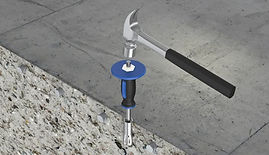
anchor point installation
Anchor point fixings are a critical component of rigging operations, providing secure attachment points for lifting, pulling, supporting, and fall protection systems.
Common anchor point fixings used in rigging include mechanical expansion anchors, chemical (resin) anchors, cast-in anchors, through-bolts, and welded or bolted steel anchor points. Each type has specific advantages, installation requirements, and load capacities. Correct installation, inspection, and maintenance are essential
Chemical Fixings
Chemical fixing anchors (also called chemical anchors or resin anchors) are fixings used to securely fix threaded rods, bolts, or reinforcing bars into concrete, brick, or stone using a high-strength adhesive instead of mechanical expansion.
Common rigging applications include:
-
Installing permanent anchor points for lifting equipment.
-
Securing steel brackets, base plates, and support frames.
-
Fixing davit bases, hoists, and gantry components to concrete.
-
Installing fall-arrest anchor systems where certified chemical anchors are specified.
-
Retrofitting lifting points into existing concrete structures.


expansion Fixings
Expansion anchors are mechanical fasteners used to create secure anchor points in concrete, stone, and other solid masonry materials. They work by expanding against the sides of a drilled hole when a bolt or nut is tightened, generating friction and mechanical interlock that securely holds the anchor in place. Expansion anchors are widely used in rigging applications where reliable anchorage is required to support static or dynamic loads.


Knock in fixings
Knock-in anchors are mechanical fixings designed to provide quick and secure anchor points in solid concrete and masonry. They are installed by inserting the anchor into a pre-drilled hole and driving a setting pin into the anchor body with a hammer. This action expands the anchor against the sides of the hole, creating a firm mechanical grip within the hole.
In rigging knock-in anchors are commonly used to secure light to medium-duty fixtures, brackets, cable supports, and temporary anchorage systems. Their fast installation and ease of use make them a practical choice where speed and efficiency are important. However, they are generally not suitable for heavy lifting or critical lifting points.